Saturday, September 29, 2018

14 Uses of Sedimentary Rocks in Civil Engineering


14 Uses of Sedimentary Rocks in Civil Engineering


Uses of sedimentary rock can be found in almost all buildings and public structures. This makes it substantially important construction material in civil engineering projects.
The sedimentary rock is formed by the settlement and subsequent cementation of mineral or organic particles on the floor of oceans or other collections of water. The application of sedimentary rock in civil engineering is discussed.

Types of sedimentary rocks

There are number of sedimentary rock types. These are provided so as to discuss uses of sedimentary rocks based on its types.
    1. Clastic sedimentary rocks
      1. Conglomerates and breccias
      2. Sandstones includes Quartz , Feldspathic, Lithic,”Clean” sandstones, Muddy sandstones
    2. Biochemical sedimentary rocks
      1. Limestone; coreals, mollusks, foraminifera, and coal
    3. Chemical sedimentary rocks
      1. Pyroclastic flows, impact breccias, and volcanic breccias

    Uses of Sedimentary Rocks 

    There are many uses of sedimentary rocks in civil engineering. The main applications of this type of rock is provided below:

    1. Building Construction

    Sandstone

    • Sandstone, which is easy to work with, has been broadly utilized in the construction of buildings specifically in areas where large quantity of sandstone is available.
    • For example, The Cliffe Castle Museum in England is composed completely of sandstone. In addition to Red Fort building stone in India.
    • Marble is also used mainly in building construction.
    • Famous marble buildings are Taj Mahal in India ,the leaning tower of Pisa in Italy, the Parthenon in Greece

    Limestone

    Limestone has been used in several important building constructions for instance monuments.
    Redfort building in India, Sandstone application in building construction
    Fig. 1: Redfort building in India, Sandstone application in building construction
    Cliffe castle museum in England
    Fig. 2: Cliffe castle museum in England

    2. Structural Wall Construction

    Both sandstone and limestone are suitable for the construction of structural walls. Nonetheless, sandstone shall be considered carefully because it might be excessively porous and fragile for load bearing structures.
    Wall constructed from sandstone
    Fig. 3: Wall constructed from sandstone

    3. Cement Production

    • Limestone is the main source material for the production of Portland cement.
    • Shale is used as a component in cement production
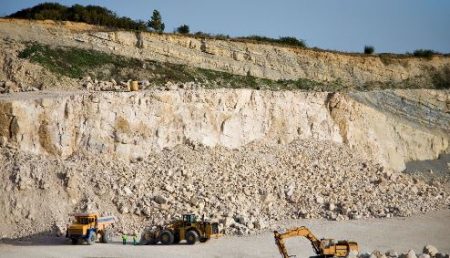
    Limestone hauled for cement production
    Fig. 4: Limestone hauled for cement production

    4. Concrete Production

    Sedimentary rock used as aggregate in concrete production to withstand pressure.
    Limestone aggregate for concrete production
    Fig. 5: Limestone aggregate for concrete production

    5. Pavement and Road Construction

    • Sandstone and limestone have been used for the construction of pavement stone and road stone.
    • Shale is used as aggregate in road construction
    • Sedimentary rocks are used in highway roadbed.
    Road stone
    Fig. 6: Road stone

    6. Tunneling 

    • Sandstone is suitable type of rock for tunneling especially thick bedded, well cemented, and siliceous or ferruginous sandstone.
    • It is strong and easily workable
    • Lining is not needed
    • Sandstone does not influence geological structures and ground condition detrimentally.
    • Tunneling is easily progressed in shale formation due to its softness, but proper lining shall be provided.
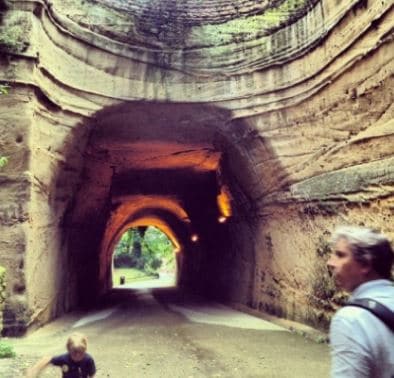
    Tunneling work, sedimentary rock
    Fig. 7: Tunneling work, sedimentary rock

    7. Brick and Tile Manufacturing

    Shale is used as one components of materials used in the construction of bricks and tiles.

    Tile manufactured from limestone
    Fig. 8: Tile manufactured from limestone

    8. Architectural and Monumental Stone

    • There are certain types of sedimentary rock that can be used as a architectural and monumental stone for example Portland stone (a white -grey limestone).
    • It can withstand weathering affects adequately. More importantly,Portland stone can be cut and craved comfortably by masons which is a crucial advantage. That is why it is one of the most favored architectural and monumental stone.
    • Portland stone has been used in the construction of St. Paul’s Cathedral, Buckingham Palace, Westminster palace, British Museum, the Bank of England.

    Buckingham palace
    Fig. 9: Buckingham palace

    9. Building Interior Decoration 

    Marble is recrystallized and then used for decoration of building interior. It is also used for statues , table surfaces and novelties.
    Sandstone
    Fig. 10: Sandstone

    10. Façade Construction

    • Portland stone can be used for the construction of facades of reinforced concrete buildings.
    • Conglomerate used in decoration
    Exterior wall decoration
    Fig. 11: Exterior wall decoration

    11. Filler in Paint

    Shale which is a type of sedimentary rock that can be employed as a filler in many paints

    12. Sheetrock and Plaster

    Gypsum is a major ingredient in sheetrock and plaster.

    13. Wallboard

    Gypsum is ground up and employed for the production of wallboard.

    14. Others 

    Sedimentary rocks are used in the construction of earthen dam, railroad ballast, canals, and as a rock fill.
    Rail road ballast
    Fig. 12: Rail road ballast

Contraction Joint in Concrete – Their Location and Construction


Contraction Joint in Concrete – Their Location and Construction


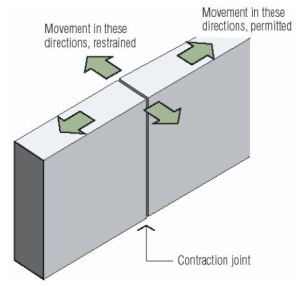
Contraction joints in concrete are provided at regular interval to from a weak plane, so that cracks are formed at the joints but not in undesired places. Contraction joints are provided in concrete pavements, slabs, walls, floors, dams, canal linings, bridge, retaining walls etc.
When concrete is placed, due to shrinkage, creep and thermal movement concrete tends to reduce in size due to which small cracks are formed in the concrete at weak zone.

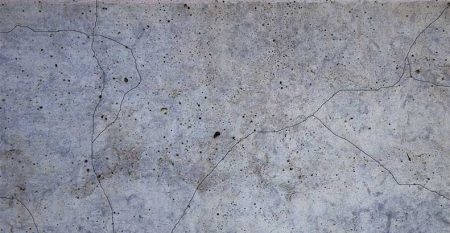
Cracks formed due to shrinkage of concrete.
Fig 1: Cracks formed due to shrinkage of concrete.

In this article we discuss about the need of contraction joints, how to make a contraction joint and locating a contraction joint.

Need of Contraction joint in Concrete

Concrete tends to shrink or reduce in size when it starts hardening. This shrinkage of concrete creates tensile stresses in the concrete which develops the minute cracks at the weak plane.
These cracks are restricted and prevent the formation of large cracks due to the presence of reinforcement in the concrete. But if its unreinforced concrete, the small cracks tends to develop into a large cracks at irregular interval
To prevent such cracks, contraction joints must be installed at appropriate intervals. It is also recommended to install these joints in reinforced concrete too.

Construction of Contraction Joint in Concrete

The main aim of providing a weak joint is to create a weak plane in the concrete at regular intervals where the possibility of cracking is more. These joints are placed to produce panels that are as square as possible and never exceed a length to width ratio of 1 ½ to 1. Joints are commonly spaced at distances equal to 24 to 30 times the slab thickness. The contraction joint is known as control joint.

Forming of vertical contraction joint.
Fig 2 : Forming of vertical contraction joint.

The process of forming contraction joint can be done in any of 3 stages:
  1. While placing concrete, a premoulded strip may be inserted into the concrete to create a plane of weakness. Metal strips inserted into terrazzo or preformed plastic strips can be inserted into concrete pavements to avoid cracks.
  2. Saw cut joints or dry cut joints can be made after the placing of concrete. Saw-cut joints should be done within 4 to 12 hours after the concrete has been finished. Dry-cut joints should be made between 1 to 4 hours after completion of finishing. In this method, joints are made using hand grover or concrete saw and the concrete is cut at regular intervals and a permeable material is placed that bonds with concrete well.
  3. Once the concrete has hardened sufficiently, a sawn joint may be formed. The joint should be made as early as possible and prior to drying shrinkage starting to occur. Delay can result in unplanned cracking of the pavement. The sawn joint is then filled with a joint sealant to prevent dirt and other debris entering it, as unsealed joints tend to fill with dirt and become ineffective.

Sawed contraction joint.
Fig 3: Sawed contraction joint.

Materials used on concrete joints must be flexible enough to absorb or deform as needed and then being able to restore back to their original state.

Location of Contraction Joint

Generally these joints are pre-defined in the drawings given by designer or architect. If not defined, they will be in a regular pattern or be an integral part of the architectural features.
Contraction joints form a convenient point at which to stop concrete work at the end of the day. Construction joints should never be formed in the middle of a bay.

Finishing of contraction joint.
Fig 4: Finishing of contraction joint.

Contraction joint is placed at the location of highest concentration of tensile stresses resulting from shrinkage are expected:
  • At abrupt changes of cross-section; and
  • In long walls, slabs.

Friday, September 28, 2018

Role of Gypsum in Cement and its Effects


Role of Gypsum in Cement and its Effects


Gypsum is a mineral and is hydrated calcium sulphate in chemical form. Gypsum plays a very important role in controlling the rate of hardening of the cement, so its is generally termed as retarding agent of cement. It is mainly used for regulating the setting time of cement and is an indispensable component.
Gypsum is a naturally occurring mineral mined from deposits formed by ancient seabeds as a raw material. Composed of calcium sulfate and water, it is used for a variety of manufacturing, industrial, and agricultural uses. Its colour is white, Grey , yellow, red, brown. An important property of gypsum is that it is naturally fire-resistant.
Gypsum
Fig 1: Gypsum

When is Gypsum added in the cement ?

In the manufacture process of cement, clinkers are formed. These cement clinkers are cooled down and added with small amount of gypsum. The mixture then sent to final grinding process. For ordinary Portland cement it remains between 3 to 4% and in case of Quick setting cement it can be reduced up to 2.5%.

Role of Gypsum in Cement

The main purpose of adding gypsum in the cement is to slow down the hydration process of cement once it is mixed with water.
The process involved in hydration of cement is that, when the water is added into cement, it starts reacting with the C3A and hardens. The time taken in this process is very less, which doesn’t allow time for transporting, mixing and placing.
When gypsum is added into the cement and water is added to it, reaction with C3A particles tales place to form ettringite. This ettringite is initially formed as very fine-grained crystals, which form a coating on the surface of the C3A particles .These crystals are too small to bridge the gaps between the particles of cement. The cement mix therefore remains plastic and workable.
The time allowed for mixing, transporting and placing plays a important role in strength, composition and workabilty of concrete. As gypsum retards the process of hydration, it is termed as retarding agent of cement.

Effects of Gypsum on Cement

  1. Gypsum prevents Flash Setting of cement during manufacturing.
  2. It retards the setting time of cement.
  3. Allows a longer working time for mixing, transporting and placing.
  4. When water is mixed to cement Aluminates and sulfates get react and evolve some heat but gypsum acts as coolant and brings down the heat of hydration.
  5. Gypsum cements possess considerably greater strength and hardness when compared to non gypsum cement.
  6. Water required in gypsum based cement for hydration process is less.