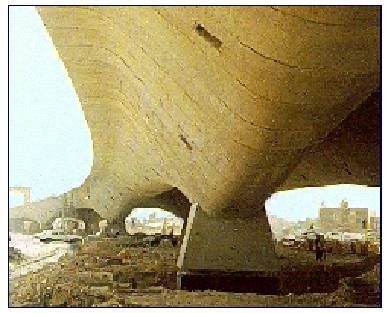
The decision of providing a bridge across any barrier is to facilitate the community residing on either side of the project. Some major bridges bring benefits to the whole country; for example, the bridges constructed across the river Ganga or the Brahmaputra in India. Another example is the Honshu-shikoku connection, that has bridges across many islands in Japan. This unique structure construction also benefits more than one country, as in the case of the Oresund link, that is constructed across the Baltic ocean.
Three Dimensions of Planning for Bridge Construction
There are three dimensions that are involved in the planning of any mega project like a bridge. This is considered as an initial step towards the planning of structures, that would finally bring up with a project that would be advantageous to the community in all aspects. The three dimensions are:
- Scientific Dimension
- Social Dimension
- Technological Dimension
Scientific Dimensions for Bridge Construction
There exist certain laws for nature, based on which every structure constructed must perform. Scientists explain these natural forms and the existence of these laws with the help of certain inter-relations between certain elements.
In one or the other form, the scientists or the engineers make use of pre-existing technologies in nature, that the only difference is the method they used to undergo.
Various scientific developments that are made by the engineers based on these; like bringing different alternative materials by chemicalanalysis, physics – to observe and analyze the dynamic behavior of the structure; Mathematics– used to analyze and determine the forces and the stresses. Hence efficient structures are evolved with the help of the scientific dimension.
Social Dimension for Bridge Construction
Enhancement of quality of life of the people, are greatly facilitated by the bridge construction. These structures improve the mobility of people as well as the material. This dimension helps to realize the pros and cons of such construction and their related precautions.
Such a huge construction brings changes to the society and the people, but also bring adverse changes to the environment. It is not only required for the bridges to satisfy the need of mobility and the future demands but also must satisfy the problems related to noise, pollution, during and after construction.
As the structure is the for the welfare of the whole community, the people are also committed and responsible for bringing their contribution to this welfare in the form of taxes, levies or in the forms of tolls. This would help in looking the construction as a cost benefited work and as a means of economic development.
The above considerations come under the social dimension. There are also chances for the incorporation of political dimension with the social dimension. This arises in the situation of choice of location or the facility, or in prioritizing the needs for the welfare of the economy.
The social dimension has a direct close connection with the scientific and the technological dimension.
Technological Dimensions for Bridge Construction
There have been many technological developments over decades in the field of new structures, methods of construction and materials, as an alternative for rare ones and in bringing new machinery that works over human workers.
This technology has helped in bringing and refining alternatives in the bridge construction. Now instead of bricks, steel, cement etc., construction are carried out by glass fibers, carbon fibers etc.
Going through such innovations in technologies, the first FRP material constructed bridge was in China in the year 1982. It composed of five box girders with a clear span of 20.4m.
The development of carbon fiber reinforced polymer i.e. CFRP cables, that gain a strength of 3300Mpa and modulus of elasticity of 165GPa, was also made. The Winterthur Bridge in Switzerland, make use of such cables. Two cables out of twenty-two are made of this material.
The steel is available with higher capabilities, like high strength varying from 60MPa to 100MPa, that have remarkable ductility and corrosion resistance. These had led to the new construction choices in arches, cable supported structures, slender structures and longer spans.
The accurate behavior of structures is clearly analyzed with the help of new techniques of scale models, computers for huge analysis and aerodynamic studies.
With the development of new heavy vehicles with huge capacities, the engineers are forced to construct the bridges with higher capacity. This will influence the strength and the dimensions of the bridge and affect the maintenance related to the same.
All these bring up a higher impact on the environment, in the form of air pollution, higher depletion of natural resources. These massive structures make use of huge amount of concrete, which in turn make use of aggregates from nature.
When it comes to the concern of a structural engineer, the scientific dimension comes to be the primary criteria. But he must balance with the other two dimensions i.e. the social and the technological dimension.
This concludes that he must evolve a structure that is acceptable socially at the same time economic, durable and efficient. This depends on how he chooses the technological dimension, which must be conducted at the conceptual stage of the project.
Planning Sequence for Bridge Construction
The planning sequence for the construction of a new highway or a railway project is a major part of the project planning. Based on the complexity of the barrier across which the bridge must be constructed, the detailing of the project planning increases, because more investigation must be carried out. In general, the major steps that are involved in the planning for the construction of a new project is mentioned below:
- Identifying the need for the bridge
- Assessment of traffic possible and required in the area proposed to construct the bridge
- Study the location
- Study of all possible alternatives
- Refining and short listing all possible alternatives
- Identifying conceptual plans for the alternatives. This involves finding the materials, the arrangement of the span and the form.
- Preliminary design and the cost estimation
- Evaluating the alternatives, its risk and the final choice of decision
- Resource source identification by detailed surveying
- Implementation with the help of bidding documents. This is followed by carrying out by fixing the agency, the construction details, and their commissioning.
Different Stages of Planning in Bridge Construction
The major steps that are involved in the planning for bridge construction are:
1. Study on Need for Bridge
2. Traffic Assessment
3. Location study
4. Reconnaissance Study
a) Study of alternatives
b) Feasible alternative study
5. Preliminary Engineering
a) Developing plans
b) Preliminary design and costing
c) Evaluation of alternatives, risk analysis, and final choice
6. Detailed Project Report
7. Implementation
A brief idea on each stage is explained in the following section.
1. Study on need for Bridge
The decision of having a new bridge in an area is taken as a part of development of the society. This facilitates the feasibility of linking the cities and towns, which gain more importance in the overall growth of a nation. Their need is studied based on the socio-economic viabilities.
2. Traffic Assessment for Bridge Construction
An assessment of the traffic type and its quantum is necessary to decide the following factors:
- Number of lanes on the road or the railway tracks
- The geometric design parameters
- Benefits acquired by the society
The data collection for this must be done carefully so that a proper idea on how the traffic pattern, the growth strategies such as agricultural, industrial as well commercial developments are influenced. The bridge construction has a huge investment at the initial stages. Once completed, a small variation or renovation is not recommended.
So, it is advised to bring a design that considers the future capacity requirements and traffic factors. The traffic assessment study should be considered the following factors into consideration. This mainly is carried out with the help of a traffic planner or an Economist.
- The traffic composition, in terms of light and the heavy vehicles
- The maximum and the minimum speed requirements
- The annual growth rate and their variations
- The design life of the bridge
3. Location Study for Bridge Construction
While having a location study and fixing the location of the bridge, it is very essential to consider the need and the location of cross drainage works if any. The cross-drainage work is said to have 15 to 20 % of the overall project cost if it must be implemented. Hence before choosing the alignment for bridge construction, it is necessary to determine all the possible CD works and its effect. The following factors are considered reliable in fixing the location of the bridge.
- Location chosen over a stream with no bends or meanders. It will be straight in reach.
- A stream with no branches or tributaries
- The location being confined with properly defined banks
- If the bridge or the culvert is with the road approach, on either side having maximum extent
- If the crossing is normal to the alignment of the road and angle of skew is necessary, limit it.
Other than the above-specified conditions, the major river crossings of the bridge construction should satisfy the following conditions:
a) River regime
The river upstream must be straight. If there is bend in the downstream, it must be avoided. The river in the reach must be free from whirls, excess current due to eddies. The channel in reach must is narrow and well defined. The river regime should have inerodable banks that are firm. If there are no inerodable banks, over gorging, guide banks in dry locations also must be provided.
b) Approaches
During floods, the approaches must be secure from flood attacks or any major spills. High expensive approach construction must be avoided. It is recommended to pass through built-up areas, or high hills or through major basin or religious structures.
The approaches have a reasonable proximity to the main road. It should not let construction of costly connecting link.
The ideal approach will avoid the construction under water that is highly costly and uneconomical. They should help in a way to bring lesser maintenance to the whole system, hence increasing the life period of the bridges.
4. Reconnaissance Survey for Bridge Construction
This is a pre-feasibility study, which studies the entire reach of the river, that must be crossed; to find out best and suitable position for bridge location. The factors each site satisfies are taken as lists and each is analyzed individually, from which the best consideration is chosen.
The final number of feasible sites must be refined down to three or four, this can be done only by going in detail of each site and refining the most suitable ones.
During this stage, maps are used to locate theses feasible sites. The direct assessment of the site is made to understand the location features (local criteria), studying the existing and growth of traffic with the help of surveys, knowing information from the people residing, simple routes and short cuts in the area, river flow and its spread are also studied.
A feasibility study on the economy of cost, the duration of construction, the sources of resources are also assessed. Now the whole information is gathered and a comparison is made. Based on the discussion and refinement, the best feasible site for implementation is chosen.
5. Preliminary Engineering for Bridge Construction
This stage of planning can be called as a techno-economic feasibility study. Here, the technical details related to the bridge construction is studied in a detailed manner, to bring all possible alternatives to proceed the construction.
Mainly it is found that the total cost of the project is plus or minus 15% of the cost that is estimated at this stage of planning. To process the technical study, minimum level of field study and measurements, the location study, and related parameters must be done.
This study carried out at the bridge construction site should bring the following tabulated content details:
- The total length of the bridge
- The length of approaches
- If detours are present, their respective savings
- The anticipated volume of traffic
- The distance to the nearby city or town from the site
- Expected bridge project period
- The nature of stream flowing into the site
- The nature and behavior of soil strata for foundation
- The construction problems existing with bridges or approaches
- Maintenance for the bridges or approaches if any
- The internal rate of return or the cost benefit ratio
- The impact on the environment
For each element that is noted, must be assigned with a certain amount of scoring and weightage, that would finally help in choosing the best site.
7. Detailed Project Report of Bridge Construction Planning
This stage is the final stage of planning in the bridge construction, before the commencement of the construction work. Full investigation from the roots is taken and documented. The investigations conducted are:
- Ground survey
- Soil exploration- foundation details
- Hydrological data
- Model studies and analysis