Saturday, June 9, 2018

Techniques to Treat Contamination of Brownfield Land for Construction


The need to redevelop brownfield land for construction purpose led to develop several contamination treatment methods. These techniques of brownfield contamination treatment will be discussed in the following sections.

Techniques to Treat Contamination of Brownfield Land for Construction

  1. Excavation and refilling method
  2. Stabilization or solidification technique
  3. Vertical containment barrier
  4. Grouting method
  5. Cover layers
  6. Leaching and washing technique
  7. Chemical treatment
  8. Soil vapor extraction or air sparging
  9. Groundwater treatment
  10. Thermal processes
  11. Bioremediation

1. Excavation and Refilling Method

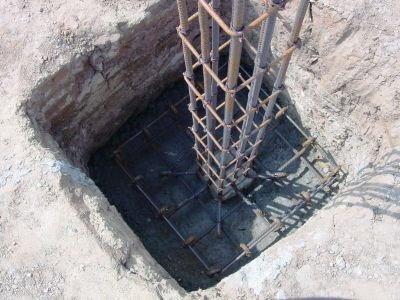
This technique is broadly used to treat contamination of brownfield land. The method involves the removal of contaminated soil and dumps it into landfill. Then suitable materials will be placed and compacted in thin layer for filled material to have satisfactory strength and withstand imposed loads. An outstanding factor that may restrict the utilization of such technique is its high cost.
Excavation and refilling method
Fig.1: Excavation and refilling method

2. Stabilization or Solidification Technique

This technique is used to treat heavy metals and organic contaminants. Binding mixtures are inserted into the ground using pressure injection or soil mixing augurs.
This technique will prevent mobilization of contamination by solidifying into a matrix that resists leaching. Lastly, the effectiveness of this method is dependent on the physical properties.
Solidification and stabilization technique
Fig.2: Solidification and stabilization technique to treat contamination of brownfield land

3. Vertical Containment Barrier

Vertical containment barrier is constructed using sheet pile wall, grouting, slurry trench wall, or soil mixing. The barrier will contain the contaminant and prevent its movement. The limitation of vertical containment barrier is the achievement of high impermeability.
Containment of contamination in brownfield land
Fig.3: Containment of contamination in brownfield land

4. Grouting Method

It can be used to control wide ranges of contaminant types. Commonly, pumpable materials are injected into the ground to improve strength, stiffness, density, infill cavities, and decline permeability of the ground.
The only disadvantage of grouting technique is that the flow of the grout cannot be controlled.

5. Cover Layers

A layer or several layer of filled and geo-synthetic material will be used to cover contaminants. This will reduce the movement of contaminated elements.
The limitation of this technique is that surface clay might dry out and consequently permeability will increase.
Cover Layers
Fig.4: Using covering layers to treat contamination in brownfield land

6. Leaching and Washing Technique

This method is suitable only for above ground level water. Contaminant is removed in solution by leaching and in suspension or by washing. It can be employed to remove broad ranges of contaminants which are carried or mobilized by liquids.

7. Chemical Treatment

In this method, chemical agents are injected into the ground through trenches for shallow depth and wells for greater depth to destroy contaminants such as pesticides, fuels, and solvents. The only limitation of chemical treatment is that it might affect fauna and flora.

8. Soil Vapor Extraction or Air Sparging

Initially, vaporous contaminants are eliminated and then contaminated liquid will be treated. In this technique, contaminants that can be carried by vapor can be disposed. Soil vapor extraction method is applicable for sandy soil and it is used for volatile or partially volatile contaminants.
Soil Vapor Extraction or Air Sparging
Fig.5: Soil vapor extraction used to treat contamination in brownfield land

9. Groundwater Treatment

As it may be noticed from the name, this technique is used for treatment of contaminated groundwater which is extracted and treated above the ground.
The application of this method is based on the hydrological and geological conditions.

10. Thermal Processes

In this method, water and organic contaminants are volatilized under 150 degree heating. Added to that, higher degree heating may be used to vitrify contaminant materials. Thermal process will remove or immobilize contaminants. This method may need dewatering that might restrict its utilization.

11. Bioremediation

This method is used for organic contaminants only, cannot be used for inorganic contaminant. Certain types of fungi or bacteria, which are placed into ground, will destroy and transform organic contaminants by natural process of micro organisms.

Calculation of Reinforced Concrete Footings, Columns and Beams


Measurement of reinforced concrete works such as foundation, columns, beams, slabs pedestal are needed for calculation of actual cost of construction and payment to the contractor.
This article provides guidelines for the measurement including formulas for the calculation of quantities of various reinforced concrete works.

Measurement of Reinforced Concrete Works:

  1. The Quantities can be rounded off to the nearest two decimals.
  2. Concrete in Structural members, such as columns, Beams and slabs shall each be measured separately.
  3. No Deductions shall be made for the following:
  • Opening up to 0.1 m2
  • Volume occupied by reinforcement.
  • Volume occupied by pipes, conduits, sheathing, etc not exceeding 100cm2 each in cross-section.
  • Moulds, drips moulding, chamfers, splays rounded or covered angles, beds, grooves and rebates up to 10 cm in girth.

Measurement of Concrete in Footings:

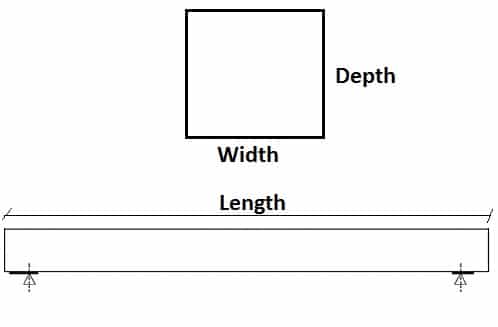
Volume of concrete = L x B x D for Rectangular and Square footing. For Trapezoidal Footing, Volume of Concrete is calculated in two parts. Bottom Rectangular portion is calculated separately and Trapezoidal volume is calculated separately.
Rectangular Volume = L x B x D
Trapezoidal Volume V= H/3 (A1 + A2 +  SQRT(A1 + A2) )
Where A1 and A2 is the area of top and bottom rectangles, H is depth of footing.
Total Volume = Rectangular Volume + Trapezoidal Volume
Where V= Volume; h= height;

Measurement of Concrete in Columns

Columns shall be measured from top of Column base to underside of first floor slab and subsequently from top of floor slab to underside of floor slab above. In case of Columns for flat slabs, flare of column shall be included with column for Measurement.

Measurement of Concrete in Beams

Beams shall be measured from face to face of columns and shall include haunches, if any, between columns and beams. The depth of beams shall be measured from bottom of slab to bottom of the beam except in case of inverted beam where it shall be measured from top of slab to top of beam.
Calculation of Concrete in RCC Footings, Columns and Beams

Measurement of Concrete in Pedestals

Pedestals is measured from top of Footing to top/ Bottom of plinth beam depending on site conditions. If measured up to bottom of Plinth beam then Ground floor column can be measured from bottom of plinth beam to underside of slab.
The Height of Pedestal can be arrived from levels of footing and plinth beam. The Height shall be crosschecked with site also.

Methods of Concreting of Columns, Pedestals and Footings


Proper concreting of reinforced concrete columns, pedestals and footings is needed to ensure desired strength and durability of these structural members.
Improper method of concreting may lead to corrosion of steel reinforcement due to pores, cracks in concrete and concrete may not achieve its target strength on setting. This may also lead to failure of columns, pedestals or footings on during occupancy of the structure.

Checklist for Concreting RCC Columns, Pedestals and Footings

Things to keep in mind before starting concrete works at site are:
  1. Formwork inspection for strength, leakage and surface finish.
  2. Reinforcement inspection as per drawing, lap length, correct lapping guidelines as per code.
  3. Inspection for concrete cover to reinforcement.
  4. Inspection for alignment of structural member as per drawing.
  5. Availability of sufficient construction material at site.
  6. Availability of concrete vibrators.
  7. Proper safety PPEs and safety measures
  8. Proper ratio of concrete mix should be confirmed.
  9. Availability of slump testing equipment.
  10. Availability of cube casting equipment.
After the above inspection is done and found satisfactory, concreting work should start.
RCC Footing Concreting

Method of Concreting of Columns, Pedestals and Footings

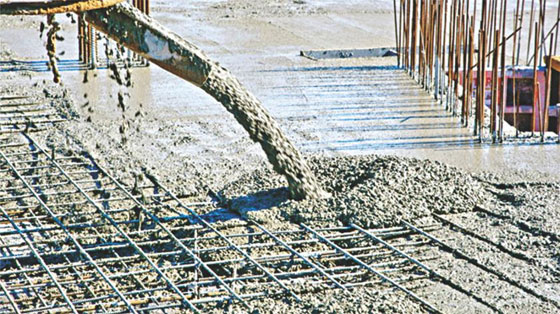
Concreting of RCC columns, pedestals and footings should start from the center of vertical bars and go towards the ends. After placement of sufficient quantity, concrete should be vibrated at regular intervals so that the concrete spreads evenly on all sides.
Over vibration of concrete should be avoided. Over vibration of concrete leads to segregation of coarse aggregates which settles at the bottom making the mix weak.
Proper keys should be provided in the center of column reinforcement and walls. if the concreting has to be stopped for the day, all upper surfaces of column and walls should be made rough by wire brush after initial setting of concrete for joints with later pour of concrete.
This is required to provide a proper grip between concrete of stem part with footing and walls and foundations. Cement and sand slurry of 1:1 mix should be applied on the footing and foundations before column stem and wall concreting is started, to avoid separation of stem/ wall where a cold joint may be formed.
After the concreting of footing is complete, immediately in a day or two starters for column and wall should be casted with proper alignment and again the upper surface of starter should be made rough.
This can be easily achieved simply by spreading and light pressing coarse aggregates particles when concrete is still green in such a way that part of coarse aggregate is outside and part goes inside.
This method of making top surface rough is to be adopted along with providing key at all places in columns, pedestals, vertical walls which are always concreted after concreting of footing and rafts concreting is over (approximately two or three days later).
These measures provide a proper grip between the surfaces. In addition to above dowels in between outer main bars of wall and column are inserted when concrete is wet to provide further grip between old and new concrete surfaces.
These dowels are 600 to 800 mm cut pieces of reinforcement bars, which are inserted in green/wet concrete such a way that half length is projecting and half length is inside concrete.

Concrete Calculator – Calculate Concrete for Slab, Beam, Column and Footings


This Concrete Calculator calculates quantities of materials required for construction of concrete slabs, beams, columns, footings and trapezoidal footings in cubic meters and cubic feet.
The quantity of cement, sand and aggregates for various proportions of concrete such as M10 (1:3:6), M15 (1:2:4), M20 (1:1.5:3), M25(1:1:2) and other custom concrete mix can be calculated for shapes such as rectangular, square, circular, trapezoidal concrete members.

Concrete Calculator


Select Concrete Mix Proportion
Cement :
Sand :
Aggregates :
W/C Ratio :
Select Concrete Member*:
Select Unit System*:

Concrete Calculator – Results

Volume of Concrete = m3 = Cubic Yard = CFT =Pounds
Quantity of Cement = kg = Bags of 50 kg =Pounds
Quantity of Sand = kg = m3 = Cubic Yard = CFT = Pounds
Quantity of Coarse Aggregates = kg = m3 =Cubic Yard = CFT = Pounds
Quantity of Water = Liter = Gallons